
Solving the Punk Rock Problem
How do flagship pieces represent our work and audience and how do we sell out without being a sellout?

I share certain pieces of my work on a regular basis. I think they’re strong representatives of what Brimstone Studios offers. They’re flagship artworks that I think you need to see. What makes them stand out though? What is it that makes them any good? The answer is multifaceted.
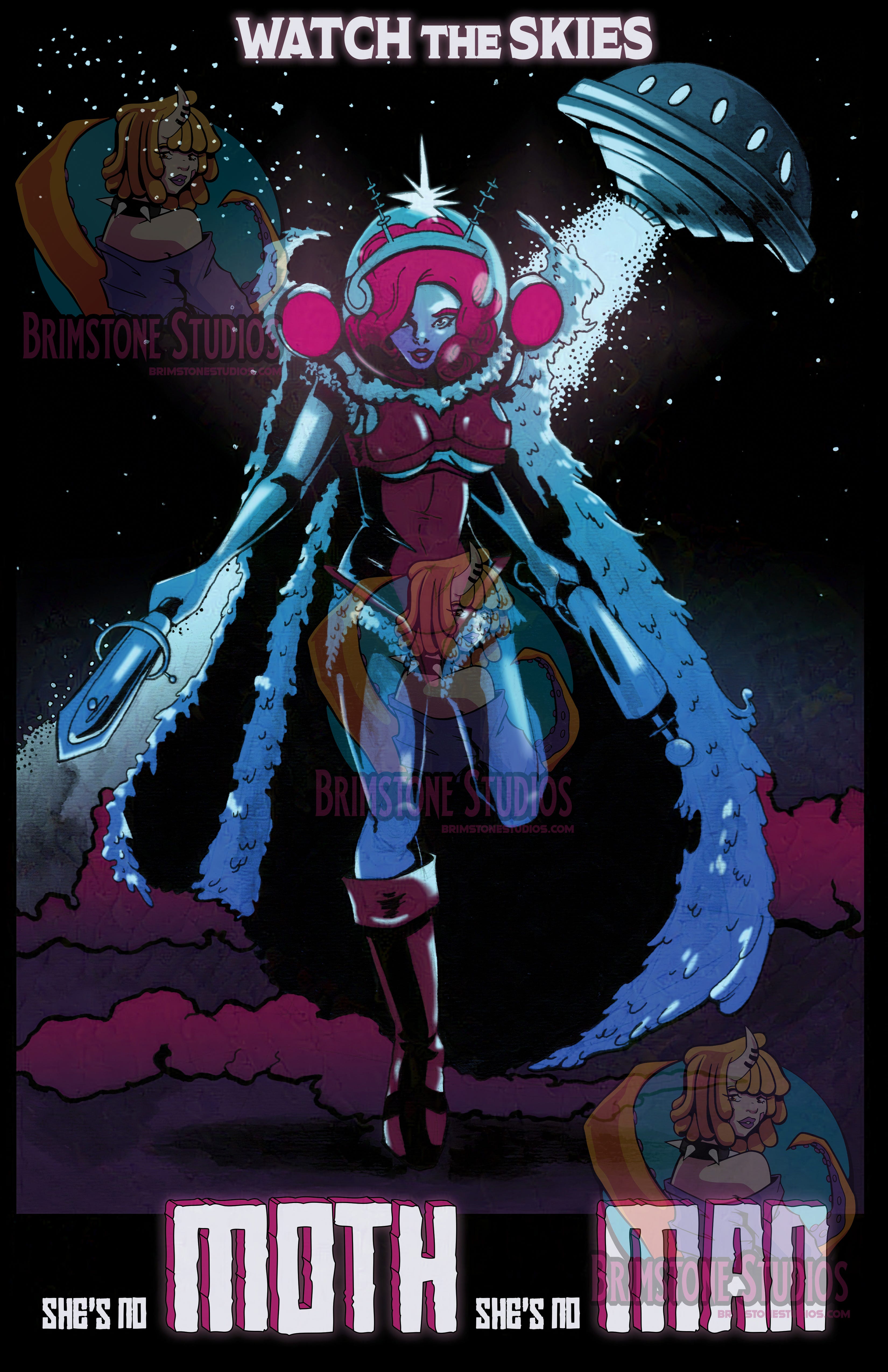
I spend a lot of time looking at a given piece. I’m there from pencils, to inks, to colors, and to publication or print. In that time, I become acutely critical about whatever isn’t working; hyper aware of all my mistakes and shortcomings. Additionally, I can fixate on what made my layout a page the way I did, or why I chose a particular approach. Both of these intimate perspectives can color my opinion on a piece to the point where I may not have any grasp on what my audience actually thinks.
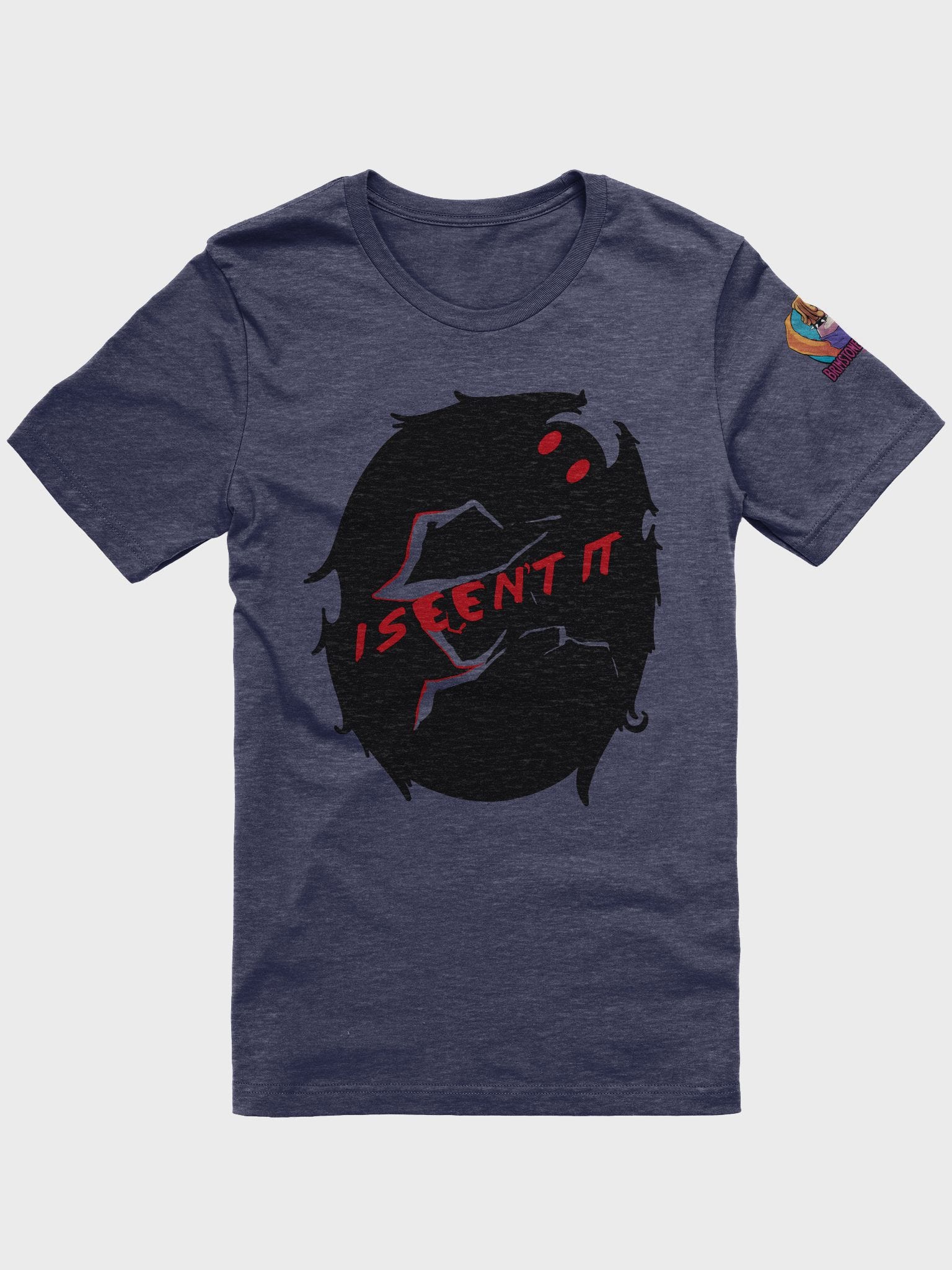
A challenge I face, running Brimstone Studios entirely independently, is judging my works with any sense of objectivity. The best metrics I have for knowing what my audience thinks are views, likes, reads, and sales. Sales can be amongst the most unforgiving and raw perspectives on success. If a piece, a book, or a shirt, sells really well, then clearly I did something right. For example, the “I Seen’t It” Mothman shirts sell to random people on line from time to time. Random people aren’t my friends or family! Random people buy because they have good taste.
When I look at current projects, like Violet 9, views, likes, and new subscribers are everything. It’s pretty similar to this newsletter, actually. When my number of readers goes up, I get excited. When likes and comments appear, I get that nibble of dopamine I cherish so very, very much. Both this newsletter and Violet 9 are growing far faster than I could have imagined. The only pickle growth presents is learning how to bring readers newsletters and comics they want to engage with that overlaps with the newsletters and comics I want to make. It’s what I like to call the Punk Rock Problem.
Punk boasts originality and self-expression at all costs. Catering to an audience runs the risk of watering down messages and goals, and risks my work selling out. Selling out, in common punk parlance, is to compromise authenticity and integrity for personal gain. Broadly, creative folks face accusations of selling out if their vibe/sound/appearance begins appealing to broad audiences. But does that really compromise authenticity and integrity?


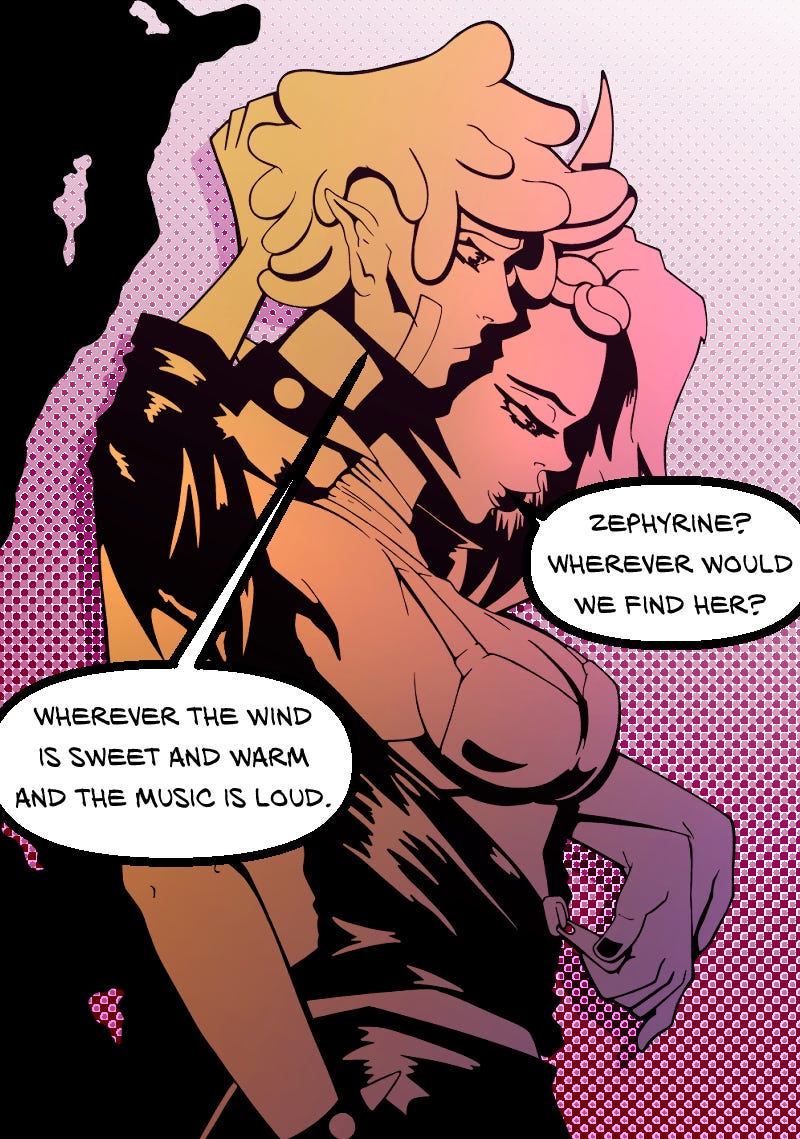
Take a look at these images. One is a figurative print (Fauna), and the other is a panel from Violet 9 (Spinning Records). Both of these indicate a turning point in my work and both stand as flagships in their own right. Fauna was a late piece in my Faithless, Fearless, series that pushed me to experiment more than I had through most of the series. The piece is moody, dark, and sensual. It was made even more powerful as a limited metal print that offered it a voyeuristic tone that really pushed it to the next level. Spinning Records was the first episode of Violet 9 in which coloring caught its stride and began setting a thematic tone I knew I had to follow.
If you want to read a deep dive on taking Fauna into the new arts, check out this behind the scenes post on Patreon. To keep this post firmly on track with the Punk Rock Problem, I want to focus on Violet 9. (I know I’m shilling, what a sellout) When I set out to make something of Violet, Aurelia, and these ideas teasing out sins, I had every intention of letting the characters do anything. If it got overtly sexual, political, or bizarre, that was fine with me. The first several episodes reflect this, in fact. I wanted to confront concepts like sin in a forward way that explored sexuality, conflict, and the spectrum of desire. That’s why I started with lust as the series’ first sin.
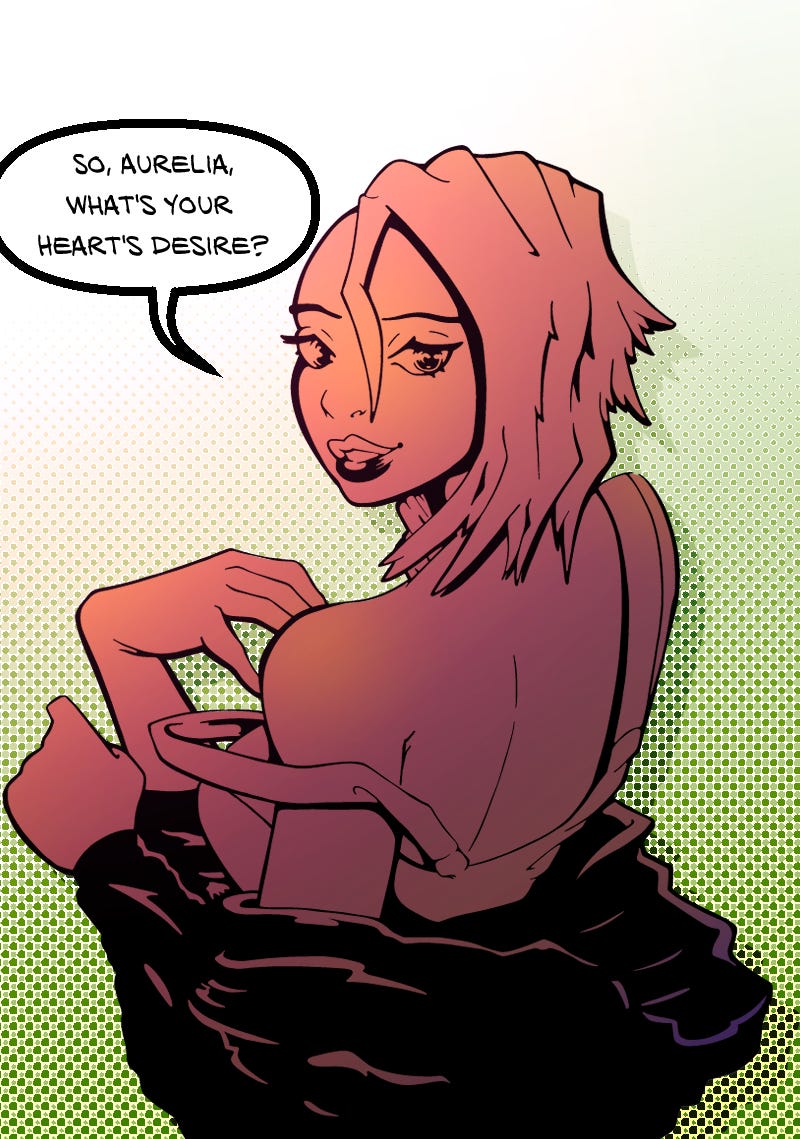
By the time I reached Spinning Records, I had refined the characters a bit. I’d established the world more, and I’d fought with censorship. It doesn’t matter what platform I want to put Violet 9 on, the more explicit the visuals become, the less I’m able to publish. From Patreon to Webtoon, to GlobalComix and Tapas, everyone has their boundaries. A lot of these lines are drawn by credit card processing and banking companies. They have their own sets of morals and rules that give them power to shut down business when something comes into conflict. Processing companies receive a lot of pressure from lobbying groups, and as our world seemingly retreats into more conservative corners, we’re seeing big companies pulling mature content because of anti-porn, anti-obscenity movements. If I want Violet 9 seen by its growing audience, I have to play ball with rules I despise. It’s an intellectual challenge to start playing in a world of sin by striving to show the positive sides of lust in opposition to its negative sides while repressive ideologies do everything in their power to marginalize sexuality and push it into the shadows.
However, aside from battling censorship and repressive lobbyists, Spinning Records was a milestone in readership. Violet 9 crested 500 views, which is now far behind me. Not only had readership and subscribers picked up, I’d laid groundwork for more consistent visuals and an approach to storytelling that should let me push as many lines as I can without crossing them. My favorite part of this moment was tackling the visuals in a way that made coloring swift and emotive. Each sin in the story has its colors, and each character has a base color. Lust is Brimstone Studios’ magenta while Violet is, well, violet, and Aurelia is gold. Each character is against a gradient background and painted with a warm brown before being splashed with their signature color, against the sin they’re surrounded with. It’s subtle, it’s come a long way, and I love it.
Has Violet 9 lost its edge with soft colors and reigned in imagery? Am I pushing human behaviors, like sexuality, into the shadows where little good can exist? I hope not. The series is growing like never before, even if some of the edges are sanded off. In order to push back against the Punk Rock Problem and to hold onto my goals for the series, I am trying to make myself intimately acquainted with the conservative lines that are rising, and working to ward pushing back on them as much as I can. There’s darkness in taboo topics, but I still want to shed light on the humanity that we so often try to hide.
A series like Violet 9 is always going to butt up against holding its integrity and selling out. I want it to be a success. I want all the work Brimstone Studios publishes to be a success! But, Violet 9 and figurative work like Fauna are not humorous cryptid graphics on a shirt. Let’s face it, “I Seen’t It” was a sellout from the beginning. Its whole goal was to hit the broadest side of a fandom and growing subculture. Maybe it’s a cheeseburger. Its integrity is hard to break because it has so little to sacrifice. When I look at the works that define Brimstone Studios, I see challenging concepts. I see dark themes, I see sensuality, and I see humanity. Those are things to stand for that can be lost.

I don’t think there’s a real answer to the Punk Rock Problem. Anything we create that has any value is going to have those values challenged. The more we try to get that creation out there, the more challenges to our values we’re going to face. I think the best we can do is be honest with ourselves. If something is a hit and holds its integrity, then help it flourish. If its integrity is broken, move on or change it. Embrace the new colors, the sanded edges. Find a way to let your values push back and challenge new audiences. Let your flagships lead you, just don’t forget where you’ve come from.
Today’s Tune
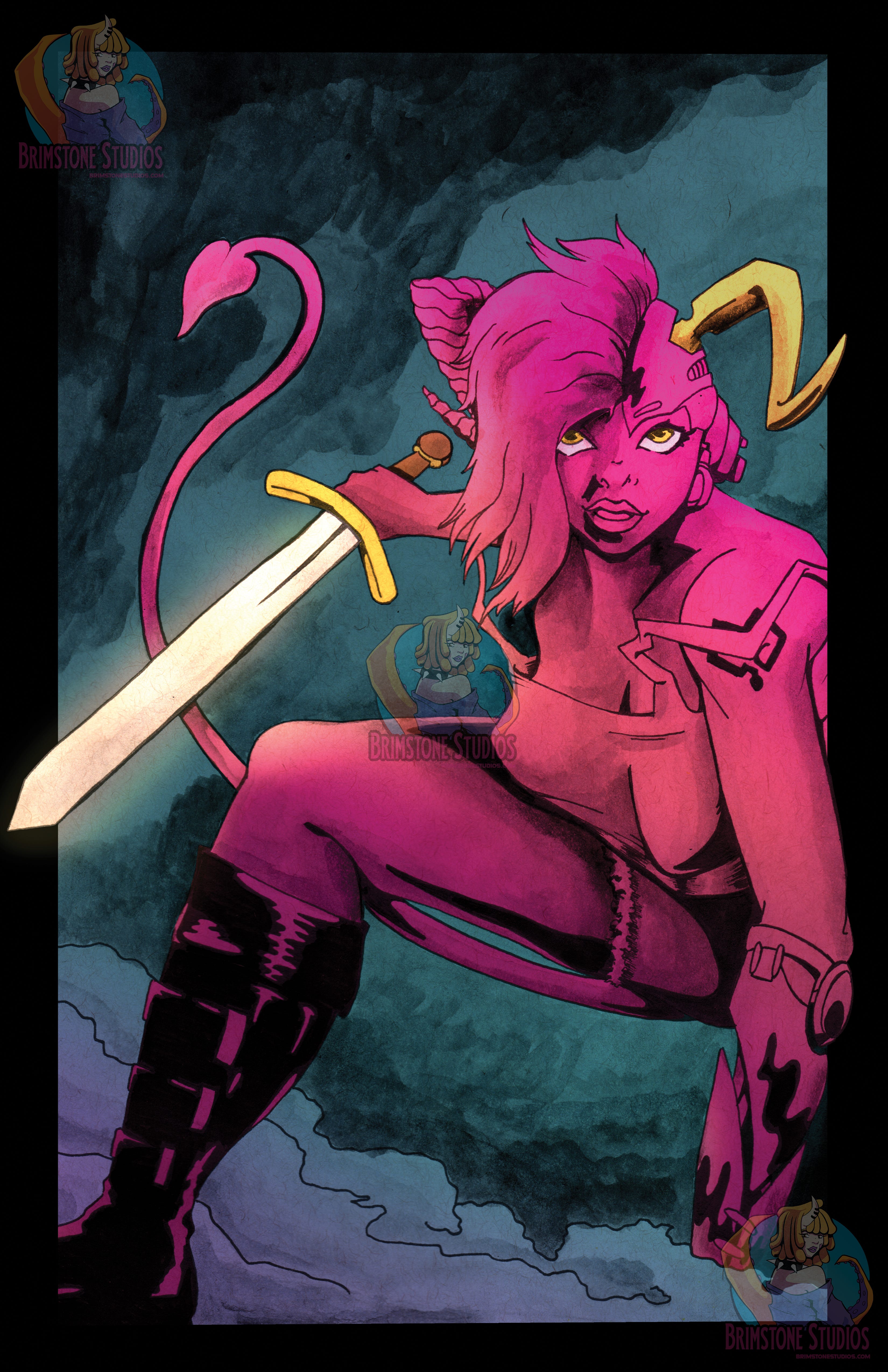
Learn more about this piece, Cyber Devil, over in the Brimstone Order!
Oh so you like it when people comment eh?
I think the thing about being punk rock and making changes has the chance of people growing with you or from you. I used to love Kevin Smith movies but after Dogma I’ve hated everything he’s done and stopped calling myself a fan. I don’t think he sold out but we changed in our ideas of what entertains us.